
[home]

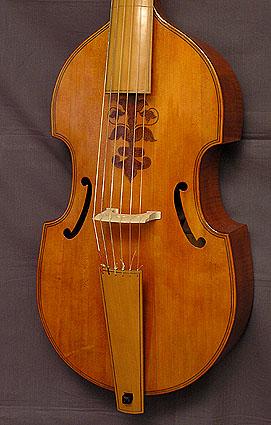
Renaissance & Baroque Viola da Gamba

Bowed Instruments for Early Music

Early Bows


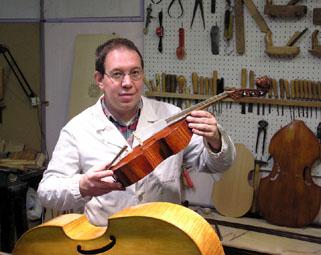
I was born in Italy where I had specialized in historical building of Renaissance and Baroque viole da gamba as well as Medieval instruments since 1983. In 1994 I moved my atelier to Belgium where I'm currently living. I have also extended my research for reconstruction and reproduction of baroque cellos using not only a baroque set up but also baroque way of building them.

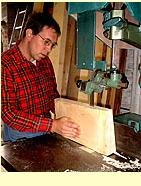
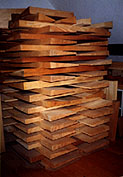
cutting out a seasoned spruce plank to make a belly

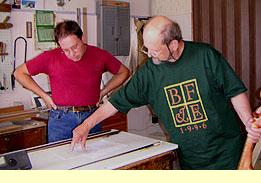
discussing about baroque cello bridges with Wieland Kuijken

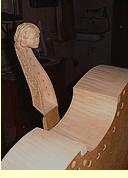
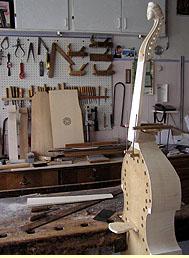
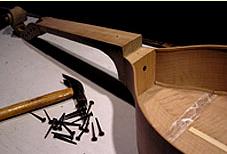
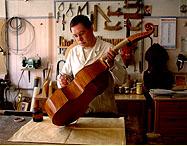
neck is ready to be glued

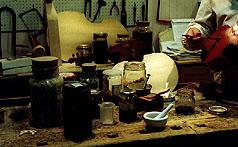
varnishing the instrument

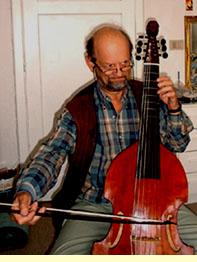
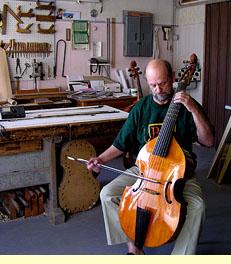
Wieland Kuijken playing in my workshop on a new viola da gamba based on Nicolas Bertrand model...

... a 7 strings bass gamba after Michel Colichon model

Sound sample

copy of M. Colichon 1693

Wieland Kuijken playing C.Fr.Abel

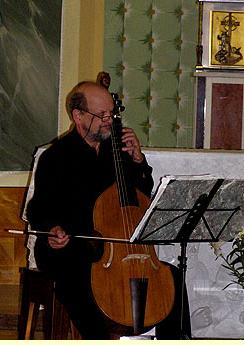
A copy of 1693 Colichon model used by Wieland Kuijken in a concert (July 2006, Salle - Italy

All my instruments are hand-crafted and remain in my hand from selecting and cutting the wood till the complete finishing. All viols are based on historical surviving examples and are result from long studies of original instruments in several European museums (Bologna, Milano, Modena, Brussels, Liepzig, Berlin, London, The Hague ) and in private hands.

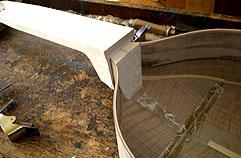
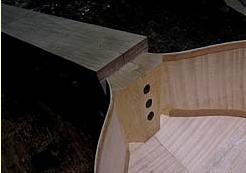
All viols and cellos are built in a historical way of making early instruments, that's a tecnique which was used in the past centuries. Neck is added to the ribs and fixed by nails (eg. like a lute) before glue both back and belly. By most makers is nowadays for Renaissance & Baroque viols as well as early violins and cellos a modern violin tecnique preferable.

glueing neck to the viol

after being glued to the ribs is neck secured by a forged nail with a tapered (from head to tip) square shaft resulting in an equal distribution of pressue along it's length and decrease the risk of splitting the wood

There is also a big difference in a reconstruction of an Italian 16th century viol or an English 17th century one or even a later 7-strings instrument used in France. Each instrument has to be built in a spirit and way of the period that it was used. It's a nosense to take for example an English model with 6 strings and just add another low A-string to have a pseudo-French bass gamba. Proportions are totally different. A very important acoustical part when doing a reproduction of a viol is the bass-bar: a French bass-bar is completely different comparing to an English one. Beeing viol a polyfonic instrument a great care has to be add to this small longitudinal piece of spruce. If the bass-bar is in the correct position any special c-string has to be used. For a wrong and not at all original way of barring an aluminium wound Pirastro string was invented... A modern violin tecnique in gamba making requires a modern string such an aluminium one. Can we imagine Marin Marais with an aluminium string on his instrument!


From the wood depends the quality and the sound of the instrument. I prefer to take a special care of wood selection. Since any store or company that is proud to (re)sell tone woods cannot tell me the exact origins of the wood, if is from sunny or shadow side of the mountain as well as the exact period when the offred timber (plank) was cut down I prefer to select the wood I'm going to use on my instruments directly from the producer (lumberjack). For most of tone wood reseller is wood suitable for instrument making just ordinary wood with narrow and regular annual rings without any relation to the acoustic properties. The meaning of tone wood should be related to a special wood that has sound (tone). Quite long time ago the owner of an important German company in Bubenreuth who trade tone woods show me a cello top telling me that was one of the best quality wood of their firma. I have to say that it was a beautiful piece of wood but when I knocked it I got a big surprise: that wood had no sound. As for my request about sound was the answer of the responsible like : '...you are a difficult person; also sound you want to have...' When I'm going to build a musical instrument I'm going to suppose that will be for an instrument that must produce sound & music, for a musician, not at all for somebody that will hang it up on the wall. To buy this kind of 'tone wood' means just buying something from supermarket or department store where nobody can tell you the origin of goods.

My personal idea is that spending some months in building a musical box instead of a musical instrument with using some not sounding woods (but saving some money) is time wasting

All my viols are built from personally cut and selected highest quality tone woods.

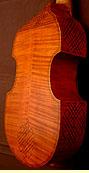
Tops are made from naturally seasoned spruce ( picea abies H. Karsten) from Italian Alps which is reach of overtones, backs, ribs and necks are from Balcan flamed maple ( acer pseudoplatanus). None of my instruments will be made from German spruce which is heavier and more sandy and not rich of upper harmonics.

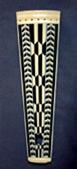
Fingerboard and tailpiece veneering is for baroque instruments from ebony (diospyros ebenum) as well as pegs; for renaissance instruments is this replaced by boxwood ( buxus sempervirens). For medieval and renaissance bows European hophornbeam is used (Ostrya carpinifolia Scop.).

Being the varnish also a fundamental part of the sound of the instrument I'm looking to obtain it myself from strict natural ingredients using substances like resins, copals, oils,natural extracts and colors. The varnishes are based on ancient recipes.

Last but not least about strings. As for wood is the problem quite similar. Larger string companies have their routine production and the result can be from poor to not so bad. For a good to excellent sound you need to use strings which are custom made.

For all of my instruments custom Italian made Universale strings will be used. From ordinary cow strings to the best quality sheep gut strings. In the past centuries only sheep gut strings were used on musical instruments. At the end of 15th century Johannes Tinctoris (1445-1511) in his De inventione et usu musicae wrote: 'His autem chordis ex arietum intestinis communiter factis '... (The strings are generally made from ram's gut...)

Nowadays is for economical reasons (not acoustical) cow preferable.

Sheep gut strings will be for a good musician a discovering of real authentic and historical sound.


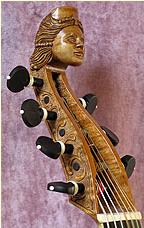
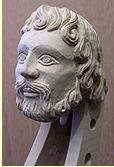
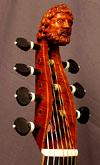
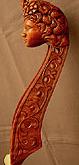
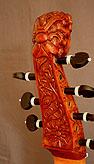
Baroque instruments end usually with a carved head or -for some English examples- with carved open scroll and carved pegbox.


Carvings are made on request from the customer. English viols have usually geometrical purfling decorations and double purfling on top and back side.


Click for some examples of carved pegbox

and some more details about carved head

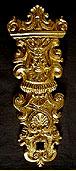
and a larger picture of carved gild tailpiece


All instruments can be supplied with a case:

Cases from

are individually constructed to the exact size of the instrument.

Cello cases from

are recommended for a 7-string bass viol because they are quite light.

has an interesting light weight cello case (4 kg) and some soft cases.


I ask for one third of the total price with your order and the final balance due on delivery or before delivery for overseas orders. All delivery and insurance cost as well as local tax to be paid by the customer. The order is confirmed upon receiving your deposit.


I live in a small Flemish village in the surrounding of Brussels. Visitors and gamba players are always welcome in my workshop for trying instruments.

My address:

Parochiestraat 92

9472 Iddergem

BELGIUM

Tel : (32) 53. 67 25 22

Fax : (32) 53. 41 64 80

Would you like to have some more information or a price list?

Send me an e-mail in English, Italian , Dutch or Japanese or submit the request information form.


Designed & created by Marco Ternovec

Copyright & copy: Marco Ternovec, 1999-2006 - All right reserved

All materials contained in this web site including images may not be reproduced ,displayed, published or used by any means without the written permission of Marco Ternovec, Laboratorio di Liuteria Antica